How Product Hunt almost died
First a quick note: I wrote a version of this blog post years ago. I didn’t publish it, afraid it might reflect poorly on the company at the time.
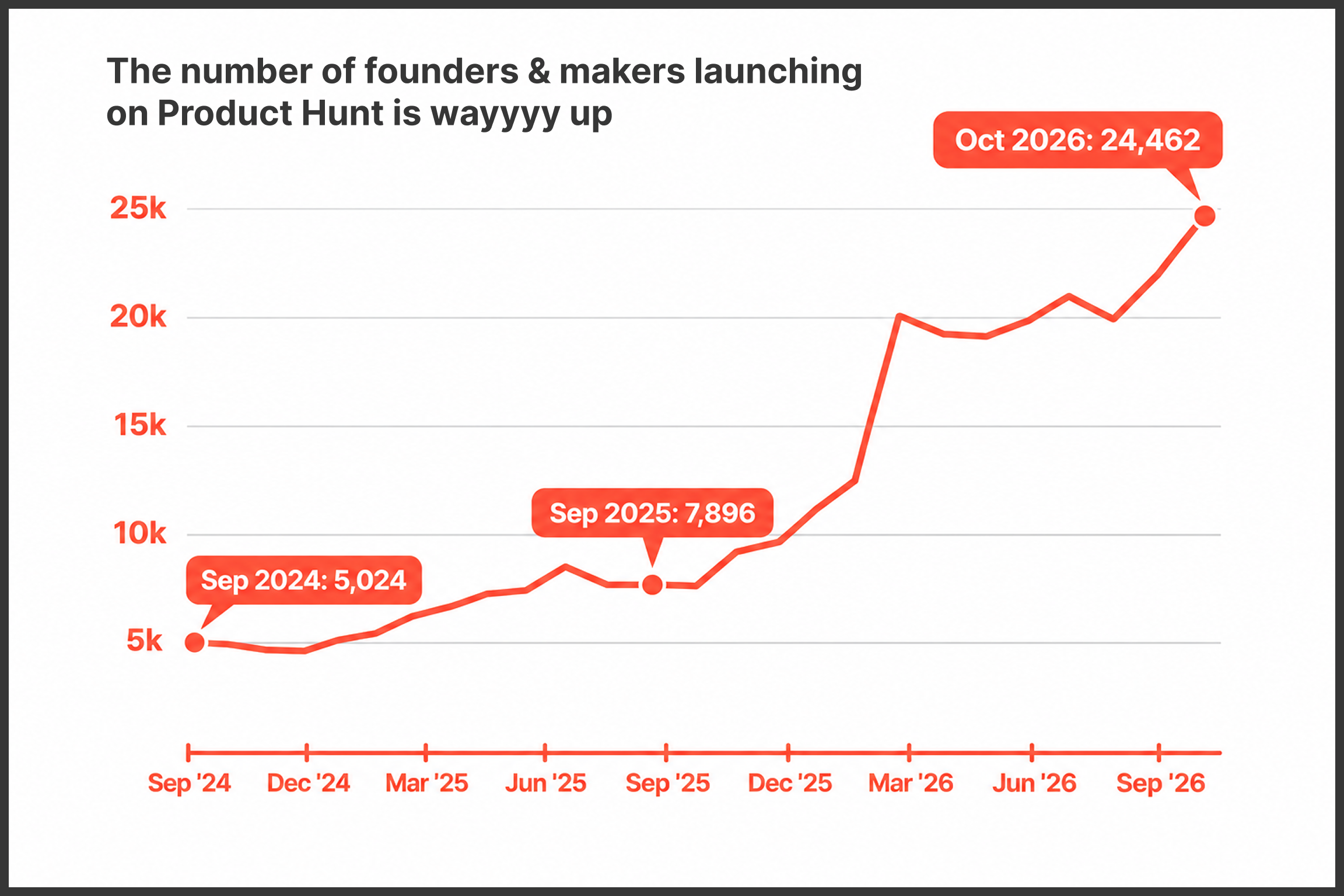
Today, Product Hunt is seeing record levels of maker engagement as it celebrated its 13th bday last week. 3x as many makers are launching as a year ago, ~25% of unicorn founders have accounts on the site, and many of today’s fastest-growing startups continue to launch early on Product Hunt, including Cursor, Lovable, Perplexity, Mercor, and micro1.
I felt drawn to finally share part of the story few people know about. It's rare to see founders openly share the messy details of fundraising, navigating M&A, and fighting for survival. And often for good reasons. Hopefully this story and my learnings are helpful.

“How are things?"
Founders get this question all the time. And we hate it.
Things usually aren't going well. And even when they are, our minds burn with self-doubt and anxiety. There's always a fire and it comes from all directions.
But we say "Things are great!"
We put on a mask to signal confidence to our investors, team, and customers. If they start to doubt, everything could crumble.
I've always described entrepreneurship as a series of high highs and low lows. It's a sine wave. The highs are incredible. The lows are devastating. Entrepreneur or not, we all face difficulties in life, professionally and personally, but there's a uniqueness to being a founder that's difficult to internalize until you've been there... especially when your company's about to die.
The Highs
In 2013, Product Hunt found product/market fit within tech quickly.
As tech culture went mainstream and building software became more accessible, more makers and founders entered the market to compete for attention. But most people don't have an audience and the press certainly couldn't cover everyone's launch (nor was it their job to do so). We quickly found a "hole" in the market and from the beginning engagement and traffic to Product Hunt skyrocketed, month-over-month.
Those early days were so fun. I woke up every morning before the sun, energized to run to Philz Coffee and hop online. Our roadmap emerged with ease. It was clear what to build. Our community building efforts were a hit. Investors courted us, eager to invest. We raised a seed round with some of Silicon Valley's most notable investors, joined YC, and raised a Series A led by a16z within 6 months of incorporation. The press showered us with accolades.[1]
"Product Hunt has become a must-read site in Silicon Valley" – The Verge
"A startup called Product Hunt is BLOWING up" – Entrepreneur.com
“Here's What Every Major Silicon Valley Investor Is Using To Find The Next Big Thing” – Insider
"Product Hunt Wins Best New Startup Of 2014" – TechCrunch Crunchies

Even better: We received a flood of appreciation from our community. Many makers are nervous to share their product publicly. Most have a hard time finding their first users. Product Hunt was and remains a pillar of optimism for makers around the world.
But eventually our extended honeymoon faded.
The Lows
2016 was a tough year. Growth started to slow down. A few people wrote articles attacking me and the company (to be expected). Our category expansion into games, books, and podcasts was a failure.
Meanwhile we didn't prioritize revenue. Many advised me, "Focus on growth, not revenue, because once you start generating revenue, it better be meaningful or you lose the ability to sell the vision of what it could be." This was a mistake and I take responsibility.
We were in the Trough of Sorrow, and I felt immense pressure to guide the ship with nine months of runway remaining. We had to raise, but the market shifted since our last round. 2014's "bull market" became 2016's "crunch".
So, we started a process. Over the course of several weeks, I met with over 50 Series B leads. They all said "no".
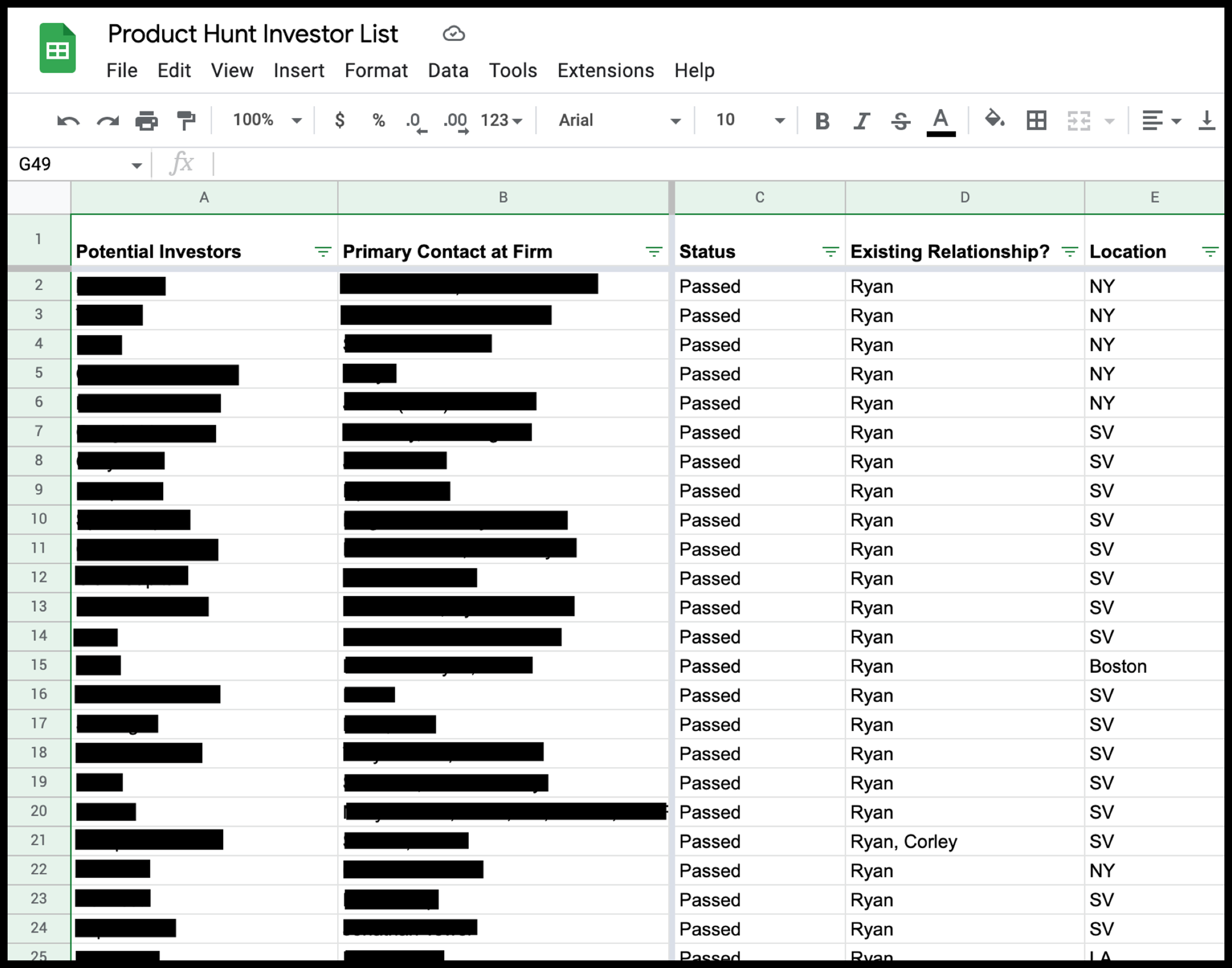
“Unfortunately after we chatted with the rest of the team, we decided that it’s still a bit early for us to jump in now. We’d love to see how the early business model comes together and how companies (both startups, SMBs, enterprise brands etc.) use and pay for the platform. We agreed that there’s a tremendous amount of value that Product Hunt can deliver but thought that “productizing” the platform and services may take longer than expected and wanted to see a bit more development here before jumping in at this point.”
“The challenge for us is simply the deal at hand - the company is a bit of a tweener for our current model: a bit too late for the venture team, and a bit too early for me and the growth team (we need to write $10mm+ checks for our structure to work). I wish it wasn't the case, and I admit this stage is a big of a blind spot for us generally.”
“Unfortunately, though we are big fans of Product Hunt as a product and of you and Corley as leaders, we are going to sit on the sidelines for now. Ultimately we’d like to see a bit more revenue traction before leaning in.”
“After a bunch of debate today, we're unfortunately going to bow out of the process. While we're a huge fan of yours and what you've built with Product Hunt, it's a hard Series B for us to do.”
“The bottom line is that we love the Product Hunt brand, the movement you’ve built thus far, what the company stands for… but we’re having trouble seeing how the business becomes very big very quickly to deliver a venture scale return.”
“As we discussed the opportunity broadly, we all think the authentic and engaged community you’ve developed is a powerful asset and can be built upon in several ways going forward. However, we’re respectfully going to decline pursuing an investment at this time; our team wanted to see a bit more evidence of the paths to creating a sustainable revenue model”
…and dozens of others.
We were a "Silicon Valley darling". We had warm relationships with dozens of lead investors. We built something millions of people use. But the market wasn’t buying it. I dramatically underestimated how difficult it would be to raise a Series B, especially in this new climate.
I, alongside a few other executives, reduced our salary and other non-critical expenses to squeeze out a few extra months of runway. I didn't tell the team. They knew our financial position and that we were raising, but I put on a mask to avoid subjecting everyone to the same doubts. I forced a smile while anxiety wrecked me inside.
Realizing how difficult it would be to raise a Series B, we started to pursue an acquisition in parallel. "Companies are bought, not sold" they say. Unfortunately, companies weren't knocking on our door. I was nervous.
We reached out to several large organizations and strategics like Y Combinator to discuss a "partnership" (code word for "acquisition"). Most took a meeting but these discussions didn't go anywhere, except for one.
A large east coast media conglomerate leaned in, with the assistance of one of our investors who helped us establish a relationship several months prior. A second meeting landed us in New York to meet the CEO at the top of the One World Trade Center.
I entered their fancy office with a cardigan, feeling out of place. Fortunately I had a lot of practice assimilating. Founders are shape-shifters, after all. To my delight and surprise, the CEO asked if we were interested in being acquired. I didn't even have to ask.
This led us down a series of meetings with their M&A and executive teams. I remained sober, knowing we were very far from an agreement but it gave me hope. Maybe we'd survive, and even thrive by tapping into their audience of hundreds of millions of readers.
After several weeks of meetings and diligence, I received a vague email.
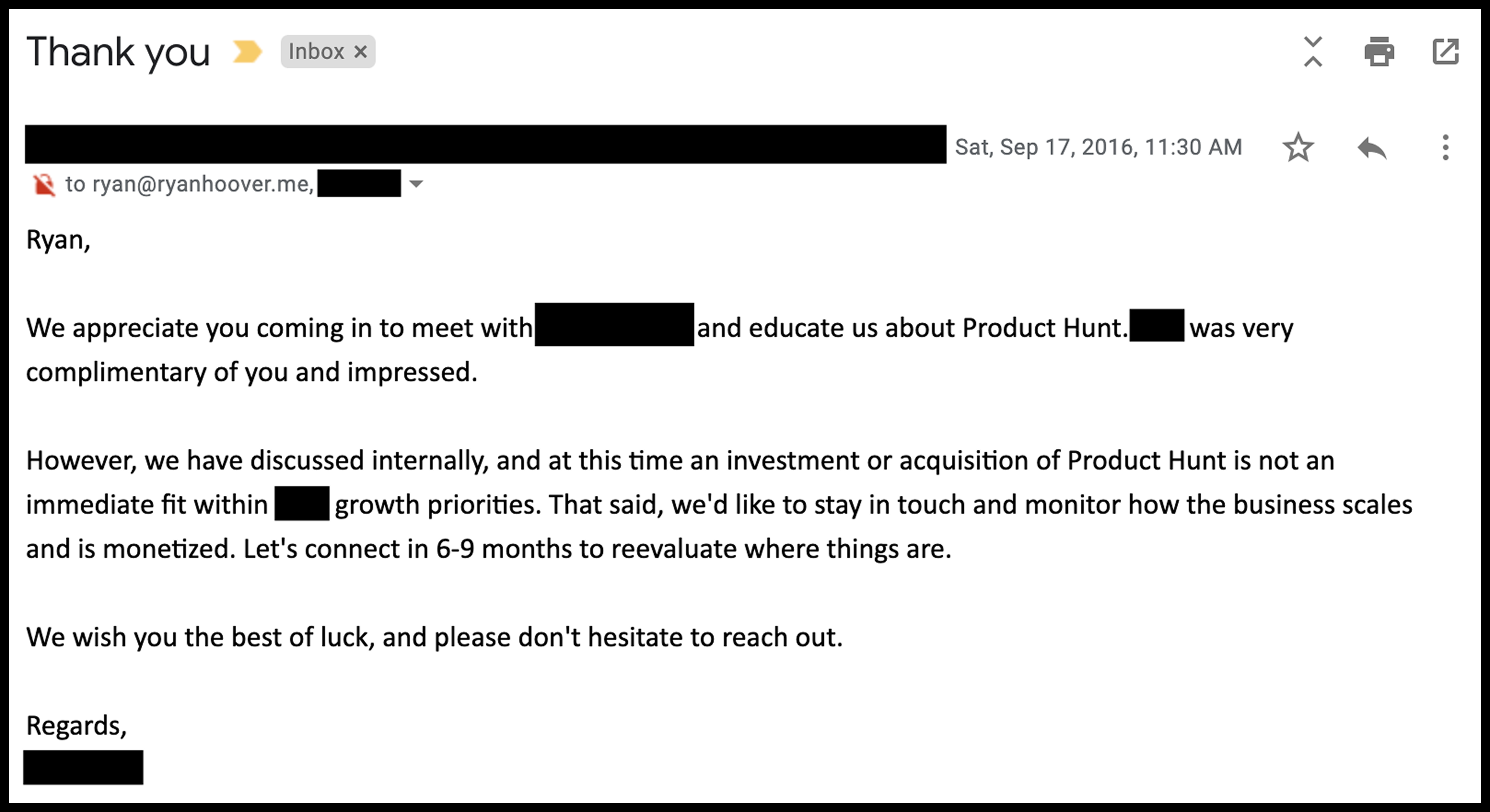
They were out. I was frustrated and demoralized. We were running out of options[2] and time.
10 days later, I emailed Naval, one of our seed investors.
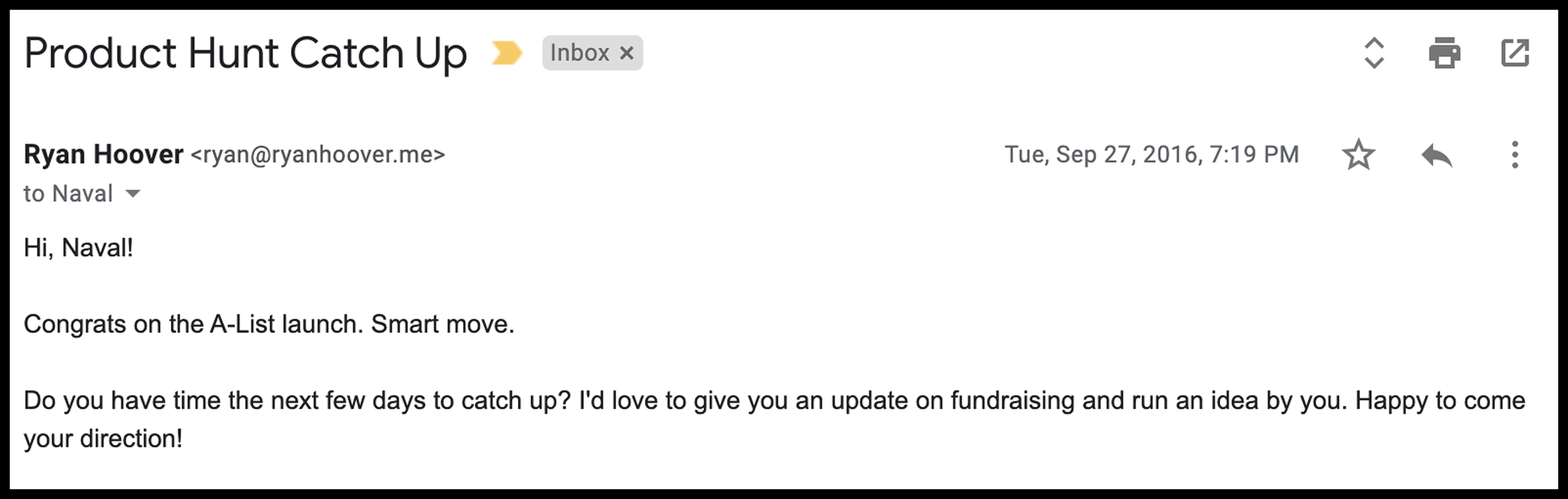
I gave him the update on the business, effectively extending an olive branch to see if there was interest in "partnering".
Three weeks later, after tons of diligence and meetings with others on the AngelList team, we had a verbal offer. The deal was far from done, but we were aligned toward something that could work for everyone.[3]
A month later, we closed and announced the acquisition. Instantly I felt lighter.
The Learnings
Despite my mistakes, I'm very happy with the outcome. AngelList has been an amazing partner and gave us the autonomy to continue to operate almost entirely independently. There's a reason I remained at the company as CEO for several years post-acquisition.
But I would have done things differently, knowing what I know now. Some learnings:
- Markets can change, quickly. The investing market is reflexive. If investors think others are moving slowly, they're more likely to take time and be more selective. We’re in a boom cycle today but it won’t always be like this.
- Assume each consecutive round is 10x harder than the last. The further along founders get in the fundraising alphabet, the harder it gets. 2014, when we raised our Series A, was a great time to raise. Investors were throwing money at us (granted, we had tremendous traction). But past interest has very little correlation to future interest. By the time we needed to raise, the market turned sharply and I completely underestimated how much harder it would be to raise a Series B. The later the round, the fewer potential investors you have to raise from. There are likely far more seed investors that can lead than Series B investors. Additionally, the pitch is less about the vision and more about the reality. If you don't have the numbers to show, it will be very hard to sell investors on a story alone.
- Know the risks if you're planning to pitch the growth narrative. As mentioned earlier, we didn't prioritize revenue-generation pre-acquisition. As a small team, I pushed us to focus and our number one priority was growth of the community. This was extremely risky. In hindsight, we should have shifted at least 10% of our efforts toward proving out a business model, soon after our Series A raise. With hindsight, I'm confident we could have achieved cash flow breakeven well before the next raise without meaningfully impacting our growth focus. Startups that are default alive have much more control over their own destiny.
- Remember, it only takes one "yes". Corley Hughes, COO at Product Hunt, joined me on many of our Series B and M&A conversations. Facing rejection after rejection, she reminded me that we only need one lead or buyer. Just one. And she was right. This gave me motivation and hope.
- Create a wide funnel. Most founders hate pitching. It's not fun and distracts from the primary goal: Build and scale something people want. But in difficult times, where runway is tight and markets are bearish, founders need to think like salespeople and open a wide funnel. You only need one “yes” but most investor meetings result in a pass, even in a successful fundraise. Founders should plan to speak with several dozen investors and fill your calendar with pitches every day until you have a signed term sheet.
- Find people you can speak to without the mask. The cliche is true: Being a CEO is lonely, especially when things aren't going great. We wear a mask to protect ourselves and the company. Optics matter, so we bottle up the doubts and fears circulating in our head. Having trusted friends, fellow founders, mentors, or coaches that don’t have a stake in the outcome to confide in can be therapeutic. But this requires complete trust.
- Try to divorce your emotions from the outcome. This is hard for me. I’m very emotionally invested in my work and probably care too much about what other people think. When your identity is your work, it’s difficult to escape the sine wave. Those that can remain objective suffer less emotional stress and make better decisions. But it’s hard to do.
Our story isn’t unique. I know many founders who are facing similar challenges right now. That’s why I’m sharing our story today.
Building Product Hunt was painful and extremely rewarding. I’m grateful for the challenge and have become a better entrepreneur and more empathetic investor as a result.
Shoutout to my team for putting up with me over the years and to Rajiv, the current CEO, for maintaining Product Hunt’s positive culture. Curious to see the graph below on its 14th birthday. :)
[1] Praise from press was very intentional. Readers of the tech press were our target audience so we built relationships with journalists and helped source stories to build goodwill and backlinks.
[2] We had suboptimal backup options. We received a term sheet from an insider on a down round for a small amount of capital. It would have given us more time but also put us in a difficult position to execute our vision with fewer resources and a much smaller team (more than half of my colleagues would have been laid off). We also modeled a skeleton crew scenario, cutting down to ~4 people and shifting all of our focus toward profitability. While painful, that might have been achievable; however, doing so would have crippled our ability to serve the community well and could compromise future fundraising or acquisition opportunities.
[3] Most M&A deals fall through after an LOI is signed. I could write another blog post on the challenges we faced in acquisition negotiations and how the deal could have easily fallen through.
[4] For those wondering how our lead investor, a16z, helped during this process: I could write a whole post on the firm and their support. We worked closely with Steven Sinofsky, Product Hunt board partner, and a16z’s M&A team. They stood by their word and were supportive through all the highs and lows. I'd be honored to raise from them again in the future.